Glasyx
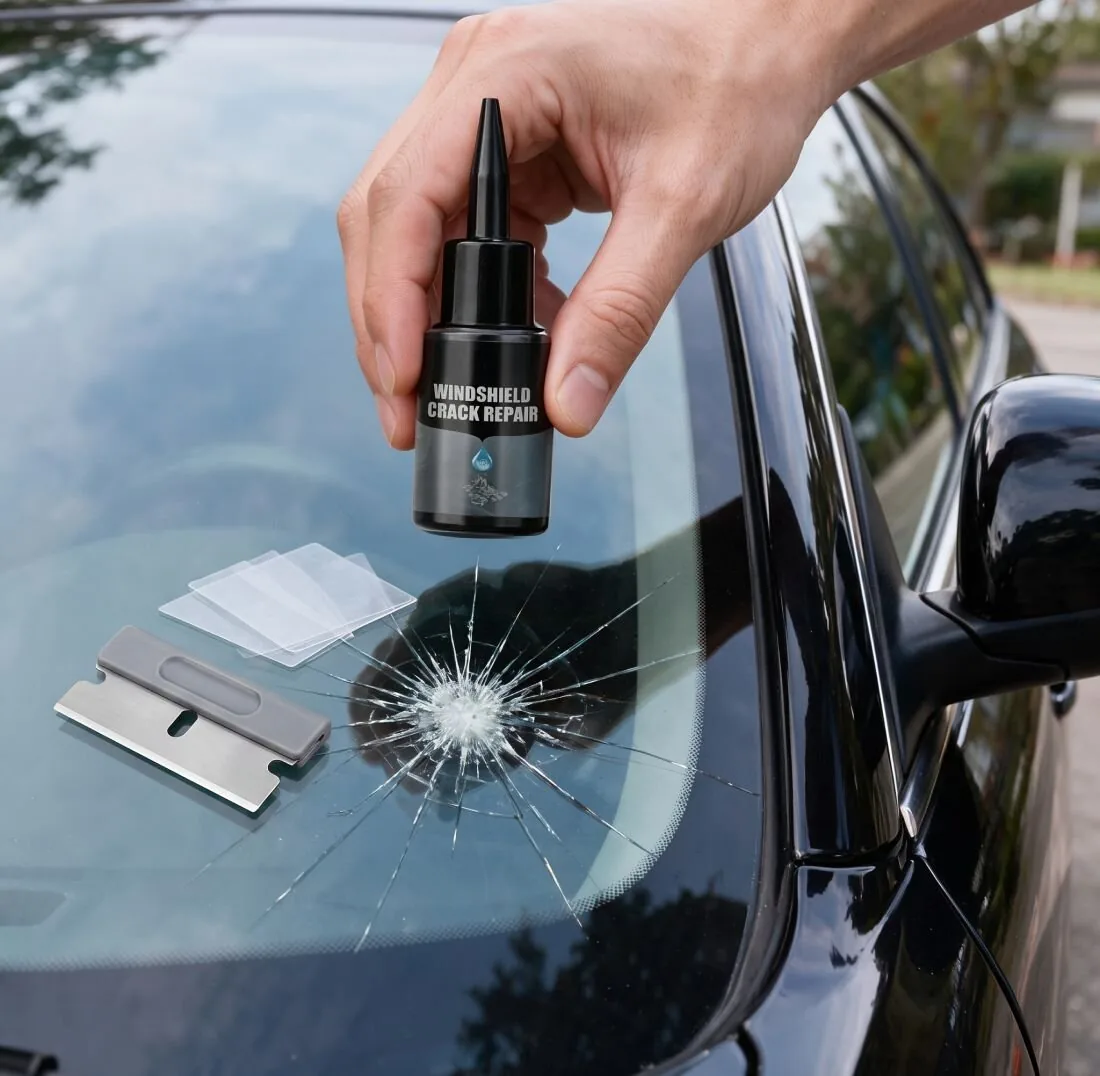
A hand holding the black Glasyx dropper bottle in front of a windshield with a star chip, blade and curing films resting on the dashboard 20minutes
start to finish
70%off this
week

Glasyx

Repair your windshield in 20 minutes, for the price of a meal.

Glasyx is a UV resin kit that fills the chip from the inside and cures into clear, solid plastic. You do it in your own driveway in about 20 minutes, with no appointment and no shop.

  • Bullseye chips, star breaks and short cracks in a single application
  • Cures perfectly clear in 10 to 30 minutes
  • The same UV resin chemistry auto glass shops work with
  • Fix it now and camera recalibration never enters the conversation
Claim up to 70% off
  • Free tracked shipping
  • 30 day money back guarantee
  • Secure checkout
4.8 out of 52,140 verified reviews

Why keep Glasyx in the glovebox?

Because chips never happen on a day when you have time to deal with them.

  • 20 ml of resin

    Enough for several small chips, and since the resin only hardens under UV light, the bottle keeps between repairs.

  • 10 to 30 minutes

    Fast in direct sun, slower under a UV lamp at night, because the cure runs on UV light rather than heat.

  • Nothing to mix

    Resin, five curing films and one blade, with no extra tool to buy before you can start.

  • 3 year shelf life

    Sealed, the bottle waits three years, and the glovebox is a perfectly good place for it to wait.

A truck kicks up a piece of gravel on the highway, you hear the crack against the glass, and for a second you hope it was nothing. Then you spot it at the corner of the windshield: a small white star, barely the size of a dime. You tell yourself you will look at it this weekend. Two cold mornings and one hot afternoon later, it has grown a leg.

Glasyx exists for that exact window of time, the few days between the chip appearing and the chip becoming a crack you can no longer ignore. It is a UV cured acrylic resin, the same family of product auto glass technicians use, packed so a driver can apply it without training. You put a drop on the break, cover it with one of the curing films, press the air out, and leave it in the sun. Twenty minutes later you scrape the excess off with the blade and the damage is sealed.

The arithmetic is what makes people act. A replacement windshield runs around $450, and on most 2018 and newer vehicles a replacement generally means the forward facing camera has to be recalibrated afterward, which shops commonly bill at $250 to $700, up to $1,000 at a dealership, and which rarely shows up on the first quote you are given. A shop repair is gentler on the wallet at $80 to $160, but it costs you an appointment and half a day. The kit is under $50 and it is already in the car.

What arrives in the box is short enough to list in one line: a 20 ml bottle of resin, five curing films, and one application blade. That is all the job needs. The resin only sets when UV light reaches it, so the bottle does not go off after the first use and 20 ml covers several small chips. If there is no reliable direct sun where you park, a cheap UV flashlight does the same work, but it is optional, not required.

Glasyx: who is it for?

Everyday drivers, first and foremost, not professionals. People who own a second car that is not worth a $450 windshield. People halfway through a road trip who would rather not lose an afternoon looking for a shop in a town they do not know. Drivers who cannot leave the car anywhere for half a day because it is how they get to work. And anyone whose insurance deductible is higher than the repair itself, which is most people with a small chip, since filing a claim for it makes no sense at all.

It also gets used on glass that has nothing to do with cars. A cracked bathroom mirror, a chipped glass table top, a mirrored closet door: the resin does not react with glass, with laminate, or with the reflective backing on mirrors, so it behaves the same way on all of them. And because the whole kit is a bottle, a sleeve of films and a blade, it lives in the glovebox and travels with the car, which is exactly where you want it on the day a stone finds you.

Benefits

Why Glasyx beats a trip to the shop?

Four reasons the bottle in your glovebox handles this better than your calendar does.

The resin fills the crack instead of hiding it

Glasyx is a UV curable acrylic resin, the same family of product professional glass equipment runs on. It flows down into the break, all the way into the fracture itself, and then light turns it into hard clear plastic. What you end up with is not a coating sitting on top of the damage but material bonded inside it. That bond is permanent, which is why the repair holds instead of lifting a season later.

PRO GRADE CHEMISTRY

Low viscosity means it reaches the tip of every leg

The resin is thin on purpose. Capillary action pulls it into the micro fractures within seconds of contact, so it travels out to the far end of each leg of a star break. Thick fillers never get there, they bridge the opening and leave the fine ends hollow. Cure time runs about 10 minutes in full sun and up to 30 in weak light or under a UV lamp.

SECONDS TO WICK IN

A zero gap bond takes away what makes a crack spread

A crack grows because there is still empty space inside the glass, and stress concentrates at that void every time the glass flexes. Fill the void, cure it solid, and the concentration point is gone. After that, a cold morning, a hot windshield or a rough road has nothing left to push against. That is the whole reason a sealed chip stops moving while an untreated one keeps creeping across the glass.

STOPS THE SPREAD

One formula covers every piece of glass you own

The resin does not react with glass, with the laminate layer inside a windshield, or with the reflective coating behind a mirror. So the same bottle works on a windshield, a side window, a rear window, a bathroom mirror or a glass table top. There is no separate product to buy per surface and no chart to consult before you open the cap. You learn the process once and it applies everywhere.

ONE BOTTLE, ANY GLASS

How Glasyx seals a chip in about 20 minutes?

The resin inside the bottle is an acrylic that stays liquid until ultraviolet light hits it. It is deliberately thin, thinner than any glue or putty you would find on a hardware store shelf, because the job is not to sit on top of the damage. The job is to get inside it. Touch the tip to a fresh chip and capillary action pulls the resin down into the star legs and the hairline branches within a few seconds, into gaps far too narrow for a thick filler to ever reach.

What happens next is the part most people get wrong: the cure is driven by UV, not by heat. A cold, bright winter afternoon works beautifully, and a mild overcast day can be slower than a freezing clear one. At night, or in a parking garage, a small UV flashlight does exactly the same thing. Once the resin hardens it becomes a clear solid that is bonded to the glass on every surface it touched. That is what actually stops a crack from running. A chip spreads because a void is left behind, and a void gives stress somewhere to concentrate: every door slam, every pothole, every blast of defroster air pushes against that empty space until the glass gives up a little more. Fill the void and cure it, and there is no longer any gap for the stress to work on.

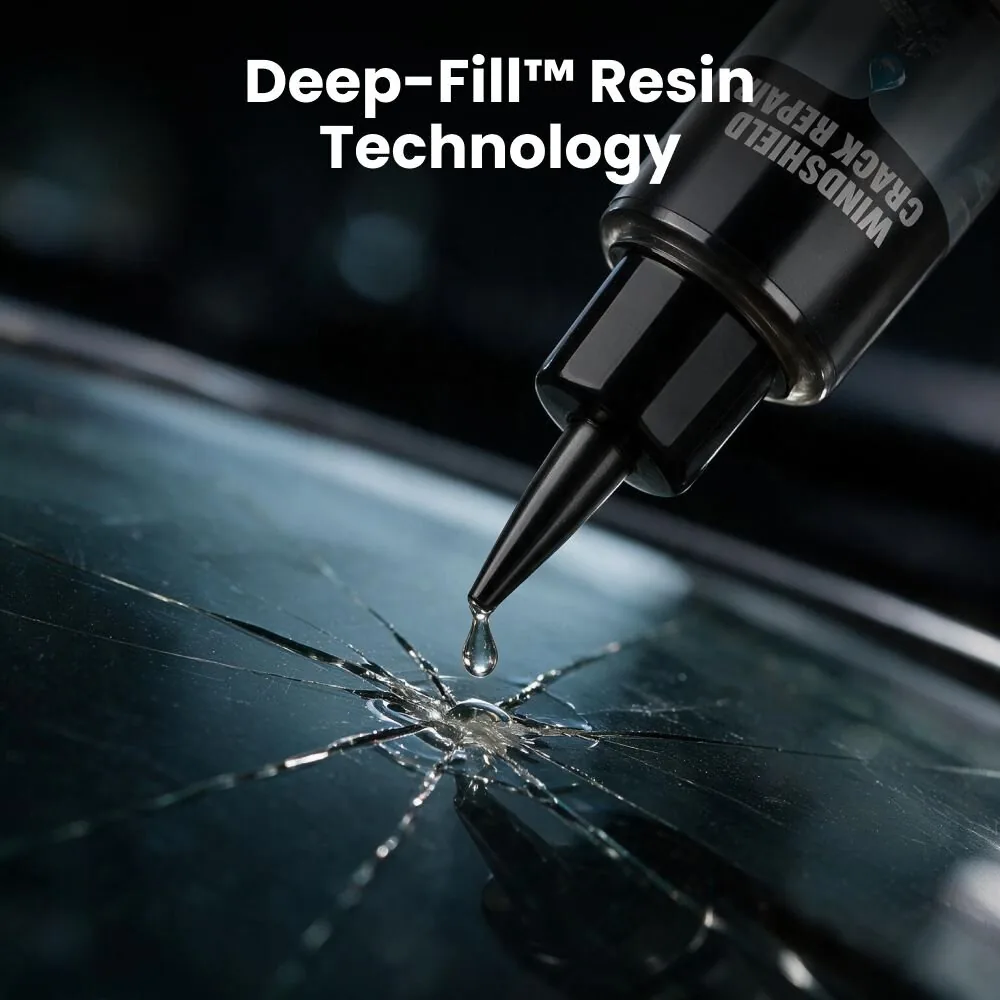
Close up of the Glasyx bottle tip pressed into the center of a spider crack on dark glass
The tip sits right on the impact point so the resin can wick into every leg of the break.
Auto glass technician in a navy work suit standing in front of a cracked pane in his shop

People assume a consumer kit is a watered down version of what we run in the bay. It is not. It is the same UV cure chemistry, and it sets hard enough to actually arrest the break instead of just hiding it from across the parking lot. If the chip falls inside the normal repair criteria, the size, the location, the single layer, this will do the job. I keep one in my own truck, because the chip you catch on day one is the one that never becomes a windshield.

Wesley Barron, auto glass technician

Then there is the math, which is really the whole argument. A shop repair runs somewhere around $80 to $160 and costs you an appointment, a drive across town and a wait. A full replacement is closer to $450 before anything else is added. And on most vehicles from 2018 onward, replacing the windshield generally means the forward facing camera behind it has to be recalibrated afterward, which shops commonly bill at $250 to $700, and up to $1,000 at a dealership. That line rarely shows up on the first quote you are given over the phone. The kit costs under $50, and one bottle handles more than one chip.

How it works

How to use Glasyx in 3 steps?

All of it happens in your own driveway, with nothing but what comes in the box.

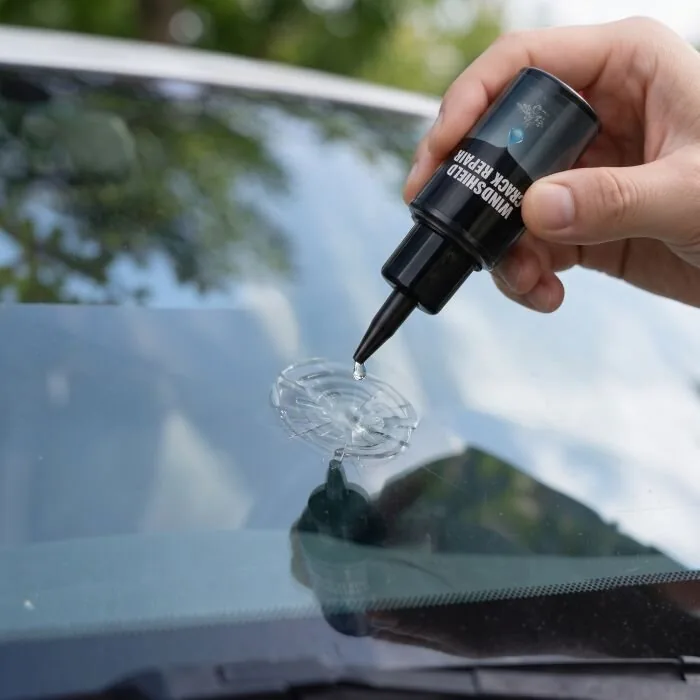
Hand holding the Glasyx bottle over a windshield chip with a drop of resin on the glass 1

1. Drop the resin on the chip

With the area wiped clean and completely dry, squeeze resin straight onto the break and lay one curing film over the top. Press the film down from the center outward so every air bubble is pushed out to the edge.

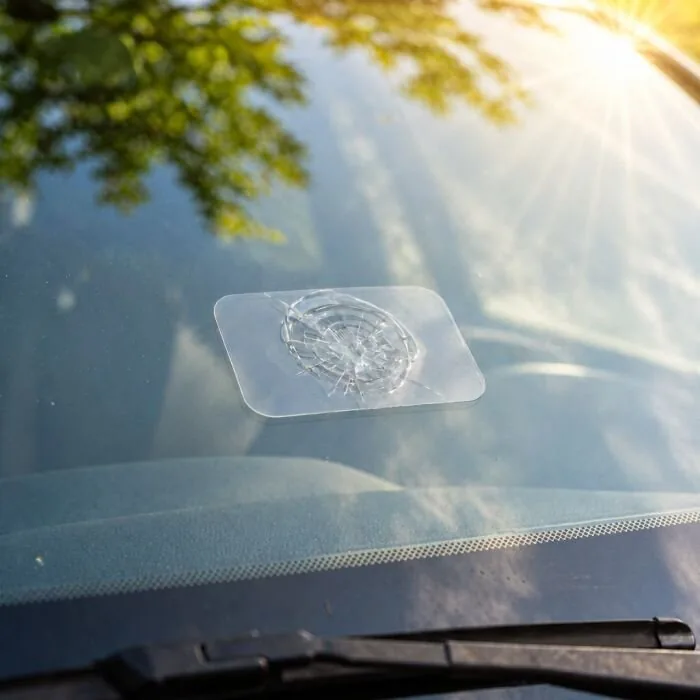
Curing film pressed flat over a filled windshield chip with sunlight coming through the trees 2

2. Let the light do the work

Park it in direct sun and give it 10 minutes at minimum, up to 30 if the light is weak or the sky is grey. No sun at all? Run a UV lamp over the film instead until the resin has gone fully solid.

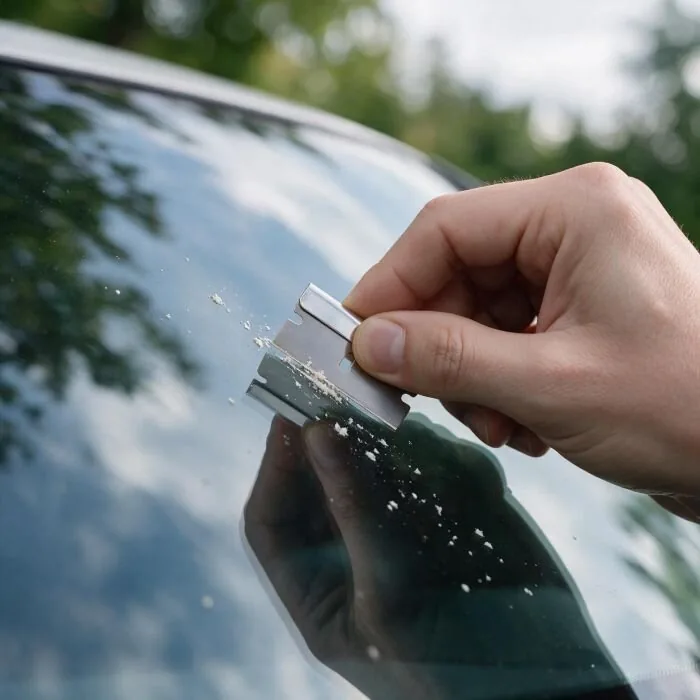
Hand scraping cured resin off a windshield with the flat blade included in the kit 3

3. Peel, scrape and done!

Lift the film off and take the excess down flush with the supplied blade, holding it flat against the glass. Wait until the cure is completely finished before you drive anywhere.

Comparison

Glasyx VS a shop repair

Both of them seal the chip. Only one of them lets you keep your afternoon.

Shop repair
Glasyx
Seals the crack before it spreads
Done in 20 to 30 minutes
No appointment, no drop off
Under $50 for the whole kit
Enough resin left for the next chip
Works in your own driveway, at any hour
Nobody upselling you a full replacement

Glasyx is not just for windshields

One formula, every kind of glass: the resin does not react with laminate or with mirror backing.

Bottle tip filling a spider crack, illustrating the Deep-Fill resin technology
Low viscosity resin reaches every leg
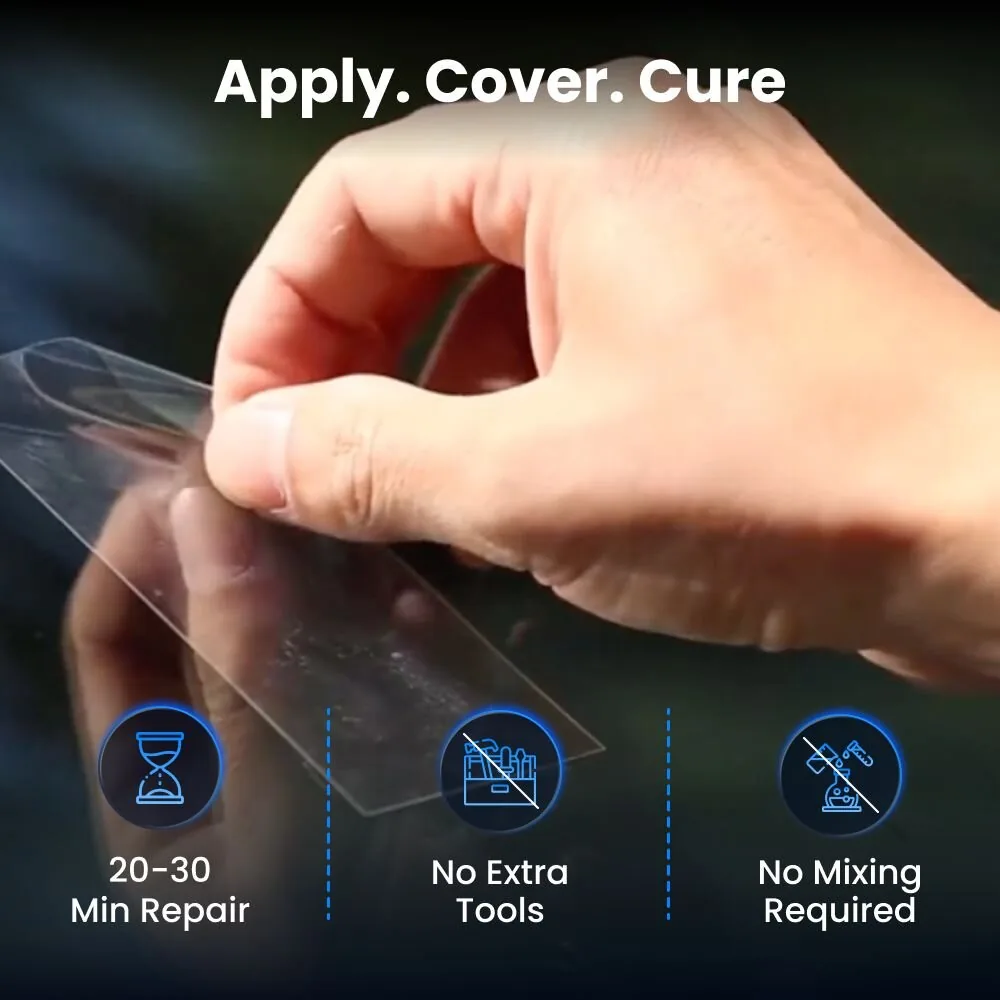
Hand pressing a curing film flat against a windshield during the cure step
Apply, cover, cure: no mixing
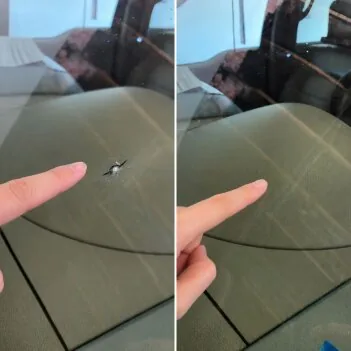
Before and after of a small windshield chip, pointed out then gone after the repair
Same chip, before and after
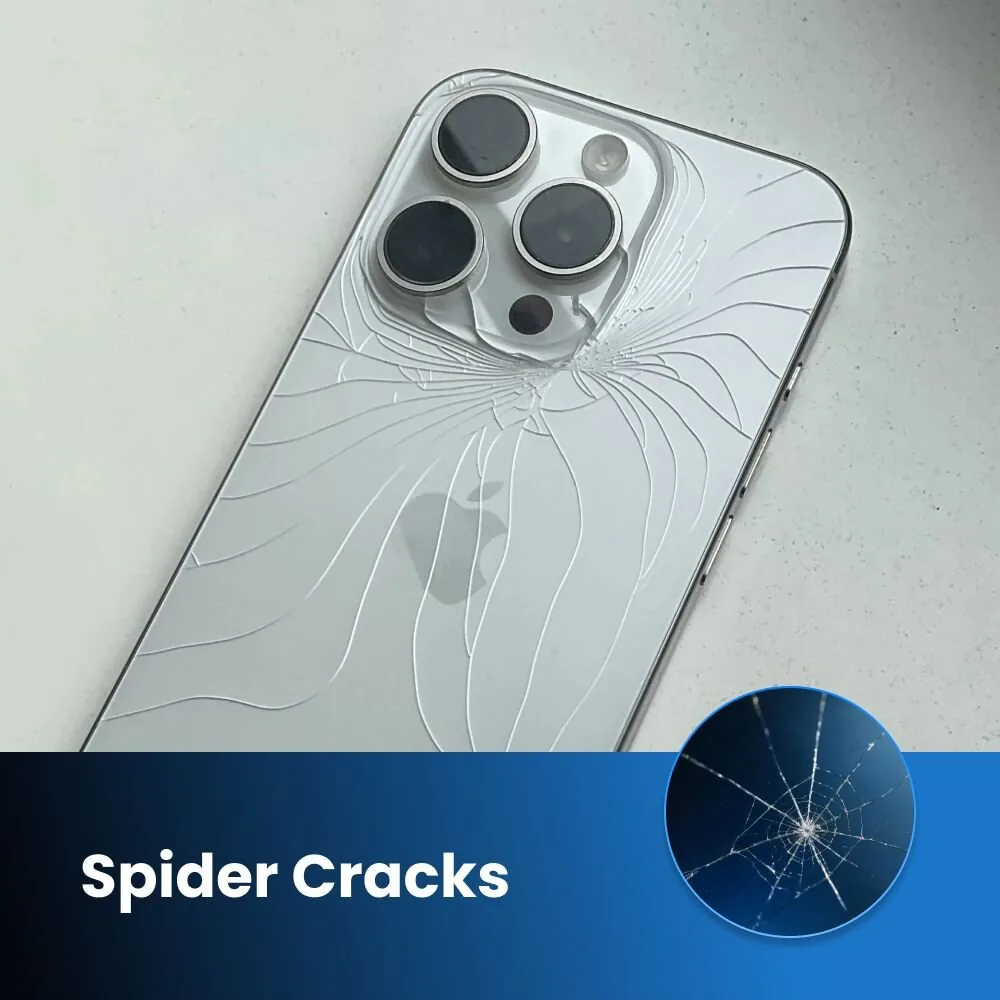
Phone lying face down with a spider crack across its glass back panel
Phone glass, if the display is untouched
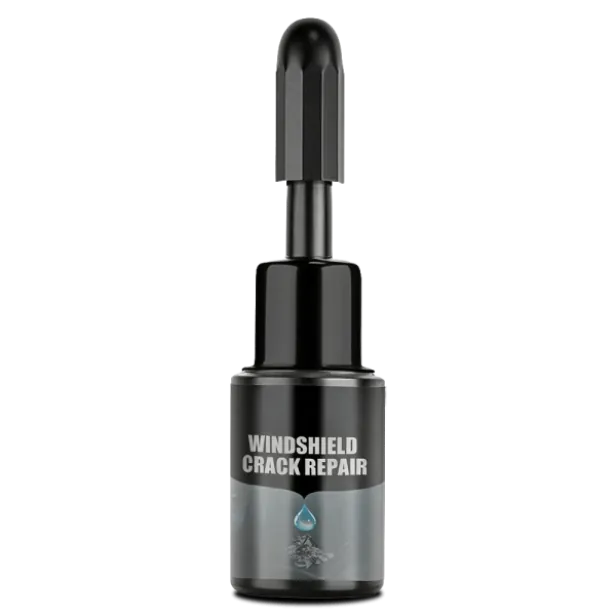
The black Glasyx dropper bottle on a plain background
20 ml covers several small chips
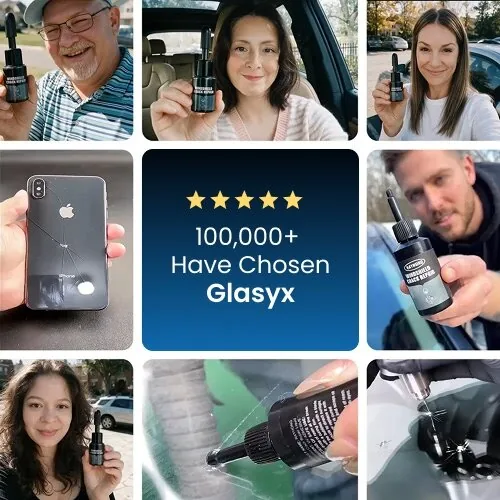
Grid of customers holding their Glasyx bottle with a five star tile in the middle
Rated 4.8 out of 5 by drivers

Once the impact is filled and sealed, the thing you stop doing is checking it every morning to see if it grew overnight.

Timing is most of the job. A fresh chip is still a small pocket of air with clean edges, and that is exactly the shape low viscosity resin is built to fill. Wait a few weeks, add a couple of cold nights and a car wash, and that pocket collects dust and moisture that keep the resin from reaching the far end of the crack. Acting inside the window where repair is still possible costs you twenty minutes. Missing it usually costs you a windshield.

The cheapest repair is the one you handle yourself. A shop visit for the same chip runs $80 to $160 and needs an appointment. A full replacement sits around $450, and on most 2018 and newer vehicles the front camera generally has to be recalibrated afterward, which shops commonly bill at $250 to $700, sometimes up to $1,000 at a dealership. The kit stays under $50 and does not ask you to book anything.

The kit travels with you. It is a small bottle, five curing films and one blade, which fits in a glovebox and stays there. Sealed, the resin keeps for three years, so buying it before you need it is the whole point. Most chips happen four hundred miles from your usual shop, on a highway, behind a gravel truck.

Nothing to schedule, nothing to leave behind. You do not drop the car off, you do not wait for a mobile tech to find a two hour slot, and you do not lose a morning. You park somewhere sunny, work through three steps, wait out the cure, and drive off once the resin is fully hardened.

How to get a clean, invisible repair?

Start with a clean, dry chip. Wipe the glass around the damage, get the grit out, and give it time to dry if it has just rained or if the inside of the windshield has been sweating overnight. Moisture trapped in the break is the single most common reason a repair looks cloudy or lifts at the edges, because resin cannot bond to wet glass. On a humid morning, five extra minutes of drying is worth more than any technique.

When you lay the curing film over the resin, press it down from the center outward. You are chasing the air out, not spreading the resin around. Any bubble left under the film ends up as a visible speck once everything hardens, and at that point it is set. Take a moment here, look across the glass at an angle, and confirm the film is sitting flat with no trapped air before you walk away.

Then let the cure finish. Ten minutes is the minimum in direct sun, but low light easily pushes it to thirty, and a thin overcast sky is far less reliable than it looks because the cure runs on UV rather than heat. That also means a cold, bright winter day works fine. If you are in the shade, in a garage, or working after dark, a UV lamp or UV flashlight is the more predictable option and it will not leave you guessing.

Tip: cap the bottle right after use and keep it out of direct sunlight. The resin only hardens under UV, so a closed bottle stays liquid and usable, and 20 ml is enough to cover several small chips rather than a single one.

Up to roughly 20 cm (8 inches), you are in kit territory. Past that, two things put a crack out of reach for good: it has run to the edge of the glass, or it has gone through both layers of the laminate. In either case no kit repairs it, DIY or professional, and the honest answer is replacement. Check both before you open the bottle, because a two second look at the edge of the windshield tells you whether the next twenty minutes are worth spending.

It is also worth being clear about what a good repair is and is not. The damage stays sealed and stops spreading, which is the point, but the glass does not go back to the strength of a panel that was never hit. And while the resin cures optically clear with no residue, very fine surface marks from the original impact can stay faintly visible if you put your face right up to it. From the driver's seat, most people stop noticing within a day.

Verified reviews

Glasyx users reviews

Rated 4.8 out of 5 across 2,140 verified reviews.

Dwayne P.Amarillo, TX · March 2026
5 out of 5

Picked up a rock behind a gravel truck on the interstate and had a white star sitting right in my line of sight. I did it in the driveway that same evening before it had a chance to run. The white point is gone and I have to hunt for the spot to find it. Should have kept one of these in the truck years ago.

Verified purchase
Curtis M.Rapid City, SD · February 2026
5 out of 5

A hairline crack showed up after our first hard freeze, which is how it always starts around here. I filled it the next morning in the sun, and it was cold enough that I figured nothing would set, but it cured fine. Nothing has moved since, through a month of freezing nights. That was my main worry and it turned out not to be one.

Verified purchase
Hollis B.Modesto, CA · April 2026
4.5 out of 5

I was skeptical about using it on anything other than a windshield, so my side mirror was the test. Took about fifteen minutes start to finish and the chip is sealed. If you lean in close you can still make out where the original hit was, so it is not literally invisible. From a normal distance I do not see it at all.

Verified purchase
Ramon E.Tucson, AZ · May 2026
5 out of 5

The shop went straight to replacement and camera recalibration without ever mentioning that a repair was on the table. The number they quoted made me want a second opinion, so I bought this instead and did it myself in the parking lot at work. Cost me a fraction of that estimate. The chip has not budged.

Verified purchase
Vernon T.Boise, ID · January 2026
5 out of 5

Did mine at night in the garage with a UV flashlight because I was not going to wait for a sunny day in January. Gave it the full half hour rather than rushing it, and the resin cured all the way through. No milky patch, no soft spot when I scraped it. Honestly easier than doing it outside in the wind.

Verified purchase
Gil A.Lakeland, FL · April 2026
4.5 out of 5

Bought it, dropped it in the glovebox and forgot about it for months. Took a rock on a road trip and there it was, still good to go. I was parked in the shade at a rest stop so I had to sit out the full thirty minutes instead of ten, which is the only reason this is not five stars. Worked exactly as described.

Verified purchase
Pricing

Get your Glasyx kit here

Every pack ships with free tracked shipping, and the price per kit drops as you add more.

1 Kit

Glasyx repair kit, single bottlex1
Save 50%

Regular $79.99

$39.99

per kit

Total $39.99

Order now
Most popular

2 Kits

Glasyx repair kit, two bottle packx2
Save 60%

Regular $159.98

$31.99

per kit

Total $63.98

Take 2 kits
Best value

3 Kits

Glasyx repair kit, three bottle packx3
Save 66%

Regular $239.97

$26.99

per kit

Total $80.97

Get 3 kits

4 Kits

Glasyx repair kit, four bottle packx4
Save 70%

Regular $319.96

$23.99

per kit

Total $95.96

Stock up on 4
Accepted payment methods

Free tracked shipping on every order, backed by a 30 day money back guarantee.

FAQ

Most asked questions

Straight answers on what the kit does, where it stops, and what ships in the box.

Does this actually stop the crack, or does it just cover it up?

It fills the break rather than painting over it. A crack keeps growing because there is still an empty void inside the glass where stress concentrates every time the panel flexes or the temperature swings. The low viscosity resin wicks into those micro fissures and hardens into a solid, clear plastic, so the gap that the crack was travelling into is no longer there.

That is why the fix holds through cold nights and rough roads instead of reopening. It is worth saying plainly, though: the damage is sealed and stopped, but the glass does not regain the strength of a panel that was never hit.

What sizes and types of damage can I repair with it?

It handles the usual shapes: bullseye, star, spider or crescent, linear cracks and combination breaks. The working limit is roughly 20 cm (8 inches). Within that range the resin can reach the full length of the break and seal it.

Two conditions rule a crack out no matter how long it is. If it has reached the edge of the glass, or if it has gone through both layers of the laminated windshield, no kit repairs it, professional or DIY, and replacement is the only real answer. Check both before you start.

Will I still see the repair once the resin has hardened?

The resin cures optically clear and leaves no residue, so the white or silvered look of an unfilled chip goes away once the void is filled. Scraping the excess off with the blade leaves the surface flush with the surrounding glass.

Being honest about it: very fine surface marks left by the original impact can stay faintly visible if you look closely from a few inches away. At normal viewing distance, and from the driver's seat, most people stop noticing the spot quickly. Chasing the air bubbles out from under the curing film is what makes the difference between a clean result and a patchy one.

Does it work in cold weather, or after dark?

The cure runs on UV light, not on heat, so a cold, clear winter day with direct sun works just as well as a summer afternoon. What slows it down is cloud cover and shade, not the temperature reading. Ten minutes is the minimum in full sun, and low light can stretch that to thirty.

At night, in a garage or under a heavy overcast, a UV lamp or UV flashlight does the job and is more predictable than waiting on the sky. The one thing the cold does affect is drying: clean the area and make sure it is properly dry, since condensation on a cold windshield stops the resin from bonding. Wait until the resin is fully hardened before you drive.

What comes in the box, and how many repairs does it cover?

Each kit contains 20 ml of resin, five curing films and one application blade. That is everything the job needs, with no mixing, no suction rig and no extra tools to buy. A UV lamp is the only optional extra, and only if you have no reliable direct sunlight.

Because the resin only hardens under UV, the bottle stays liquid once you cap it, so a single kit stretches across several small chips rather than one. Sealed, it keeps for three years, which is why a lot of people just leave one in the glovebox until they need it.

What is ADAS recalibration, and why does it matter here?

Most 2018 and newer vehicles carry a forward facing camera mounted behind the windshield that feeds lane keeping and automatic braking. Replacing that windshield generally means the camera has to be recalibrated afterward, which shops commonly bill at $250 to $700, and up to $1,000 at a dealership. It is frequently missing from the first estimate you are shown, which is how a $450 job turns into something much larger.

It matters here because repairing a chip early keeps the original glass in the car, so the camera is never disturbed and there is nothing to recalibrate. Every order ships with free tracked shipping and is covered by a 30 day money back guarantee, so you can check current availability and keep one on hand before the next rock finds you.

A chip is cheap to fix and expensive to ignore. Twenty minutes, three steps and a bottle that lives in your glovebox stand between a small star in the glass and a replacement windshield with a camera recalibration bolted onto the bill. Fix it while it is still small.

Order my Glasyx kit
Order now, up to 70% off